|
Utah Bird Profile |
|||||
|
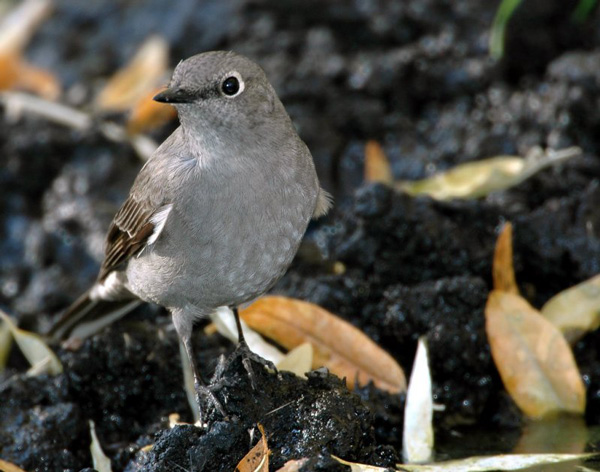
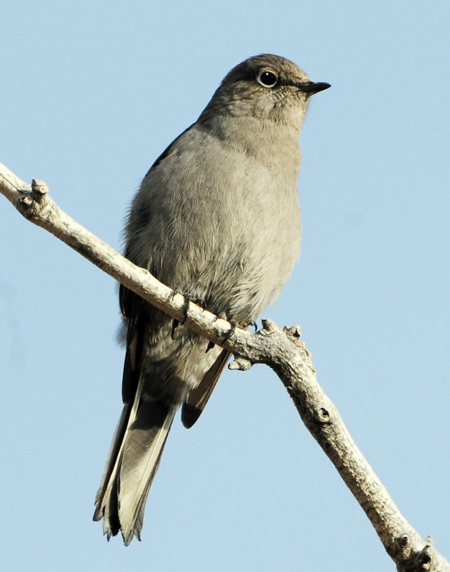
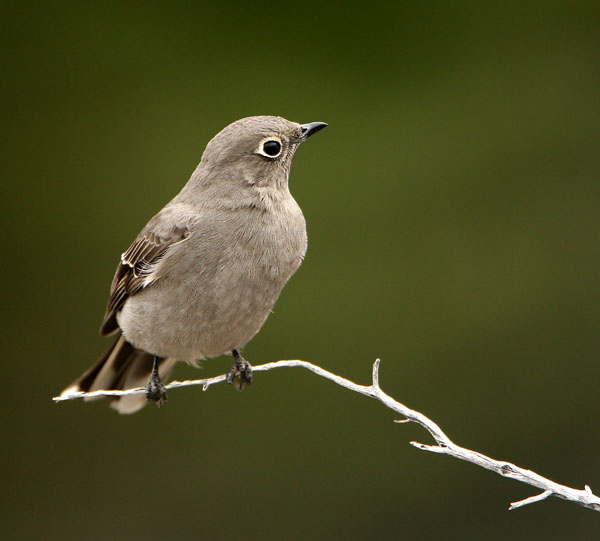
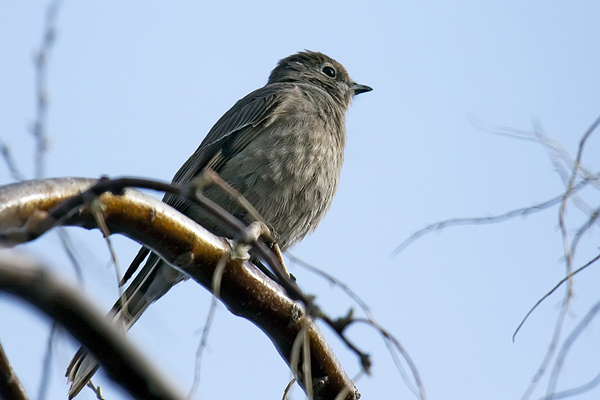
Name Roots: (Gr. myia, mua, "a fly"; edestes, "anteater" - for John K. Townsend) |
|||||
| In Utah: |
DWR Profile Utah Distribution Map |
![]() |
|||
| Nesting, feeding, characteristic behaviors: |
Nests on the ground or in a snag at a height of 0-10 feet, in a cup or
cavity nest. This species is not a cowbird host. This species is an insectivore: air sallier; omnivore: ground forager.
|
||||
| Habitat: | Breeds in Utah in sub-alpine conifer
and mountain riparian habitats. |
by Jack Binch |
|||
| How to find: |
Listed as a common permanent resident this is one of the few Utah songbirds
that can be heard singing its melodious song during the winter. Usually it
nests in higher elevations in coniferous forests. During the winter,
however, it frequently can be found at lower elevations like the Provo
Cemetery in Utah County where it feeds on juniper berries, or at the Lytle
Ranch in the Beaver Dam Wash where it is fond of the mistletoe berries. Rock
Canyon, east of Provo, and American Fork Canyon, especially the trail up to Timpanogos Cave, are also consistent places to find it. Recently (December), I
was in Ophir Canyon in Tooele County and found close to a dozen scattered about
in the area east of the town.~ Merrill Webb |
||||
|
|
USGS Profile
(Geological Survey) |
US
Winter Range Map |
US
Summer Range Map | |
|||||
|
|||||
|
Abbreviations | References | Legend
|
|||||